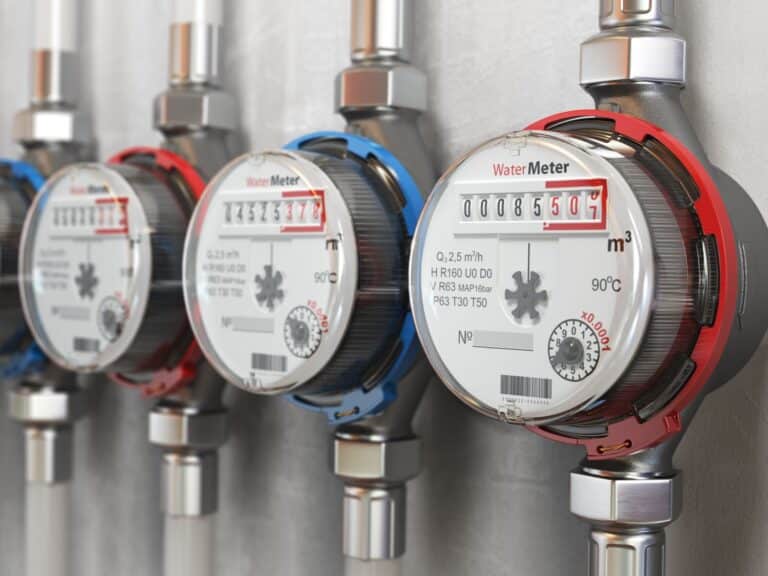
Analysing water needs for outdoor facilities
Analysis of water flows outdoors
- Quantify the drinking water used outdoors
- Install meters and sub-metering systems;
- Monitor consumption and detect anomalies (e.g. potential leaks risks).
⛔A dripping tap equates to a loss of 5 litres of water per hour. 120 litres per day. Nearly 43m3 per year.
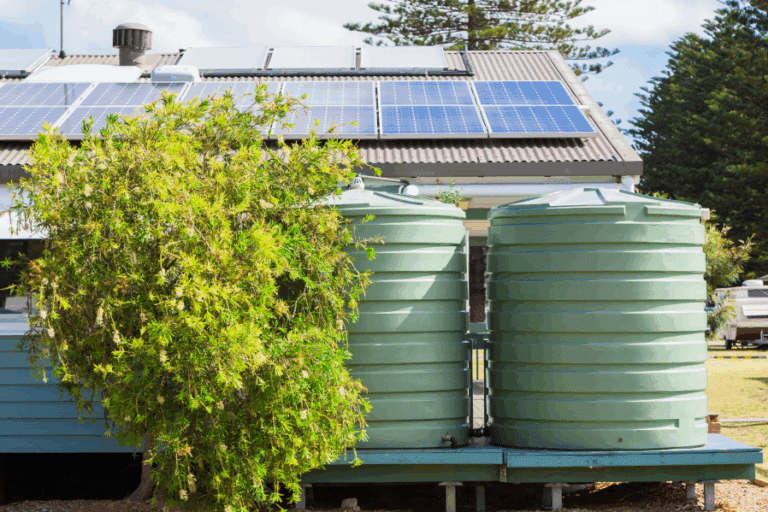
- Quantify potentially recoverable water flows using a rainwater harvesting system, for uses that do not require drinking water
- Conduct a feasibility study to determine resources and needs;
- Select the most appropriate technical solutions;
- Ensure and maintain the energy efficiency of the technical solutions implemented in the water recovery system over time.
- Increase on-site infiltration capacity
- Assess soil permeability, site topography, and drainage possibilities.
- Quantify the water flows to be temporarily retained to reduce flow rates and the overflow risks
- Assess the impermeability on site in relation to stormwater retention needs
Implementation of various measures
- Landscape areas according to natural water flows
- Install retention areas or basins to capture and infiltrate rainwater
- Design slopes and channels to direct water towards plants or designated drainage areas.
- Reduce impervious surfaces
- Replace paving stones or asphalt with permeable materials to promote water infiltration
- Integrate green roofs to capture and use rainwater efficiently.
- Choose suitable and resistant plants
- Consult a qualified horticulturist and prioritize native or climate-adapted, species that are low in water demand, allowing for better infiltration or evapotranspiration.
- Reduce or eliminate lawns in favour of ground covers.
- Adopt water-efficient irrigation methods
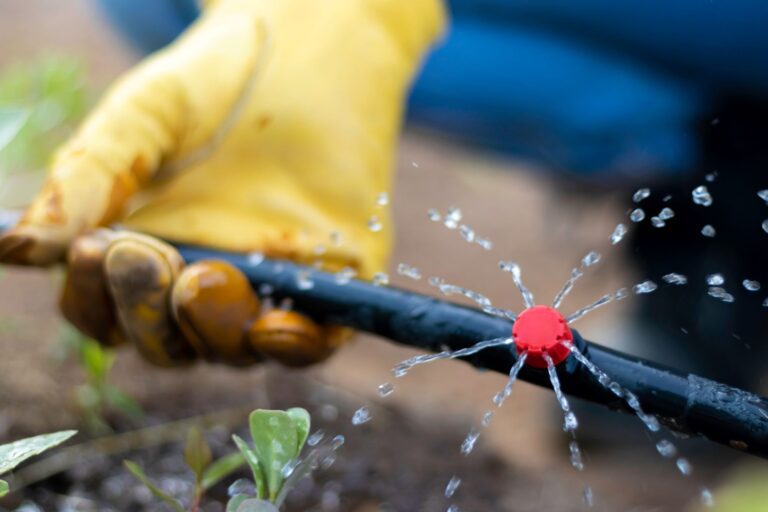
- Opt for drip or underground irrigation systems to minimise evaporation.
- Water early in the morning or in the evening to prevent water loss due to heat.
- Install timers or humidity sensors.
- Set up a water action plan
- Carry out a water audit and have a professional draw up an action plan;
- Include in the action plan procedures for water use in and around the building and establish monitoring indicators to measure the impact and improvement with the water management.
- Set contractual water consumption targets with service providers
- To involve the entire value chain in the company’s water management measures, it is recommended to include water efficiency requirements in tenders and relevant clauses to contracts for the design and maintenance of outdoor spaces.
Subsidy application
Government subsidies
Please note: any application for government or non-government subsidies must comply with the “incentive effect”, subject to compliance with the subsidy conditions.
In order to comply with the incentive effect, no binding commitment (signing a quote; paying a deposit) may be made BEFORE submitting the application file or receiving the agreement in principle from the government or the electricity and natural gas supplier following a subsidy application.
Fit 4 Sustainability programme
The Fit 4 Sustainability programme provides co-financing for environmental audits and action plans on one or more topics selected by the company (energy, GHG, waste, water, etc.).
Aid of up to 60%, 70% and 80%, depending on the size of the company, for the fees associated with carrying out an environmental study (energy audit and/or carbon footprint assessment) and a detailed, costed action plan to reduce its consumption/GHG emissions (medium- and long-term investments, ROI, etc.) – open to SMEs and large companies (except those that must carry out studies required by the environmental authorities, including mandatory energy audits)
For questions: Luxinnovation
- Subsidy for small and medium-sized enterprises, covering up to 70% of eligible costs for projects aimed at reducing their environmental impact. The total cost of the project must be between €3,000 and €25,000 excluding VAT.
- For any questions:
N.B. Government subsidies cannot be combined for the same project.
The tax relief is calculated based on the investments and operating expenses incurred as part of an ecological and energy transition project.
The tax relief rate is set at 18% and is applied directly to the amount of tax due.
This deduction can be combined with standard state subsidies.
For the project to be eligible, it must meet at least one of the following objectives:
- Improve the energy efficiency of a production process
- Improve the material efficiency of a production process
- Decarbonise a production process
- Reduce air pollution at the production site (excluding CO2 emissions)
- Produce or store renewable energy for self-consumption
- Promote the extended use of products through reuse
For certain objectives, minimum thresholds must be met.
To verify your eligibility and ensure that these thresholds are satisfied, it is recommended that the impact of the measure on one of the above conditions be certified by an expert or a design office.
Further details and conditions: Guichet.lu
For questions: Ministry of Economy – Bonus
This type of project may be eligible, provided that the implemented project relates to the company’s main economic activity, the eligibility thresholds are met, and that all other criteria set out in Article 152bis L.I.R. are complied with.


 Administration
 Agriculture, viticulture
 Aid and care sector
 Commerce
 Craft Industry
 Manufacturing
 Transport