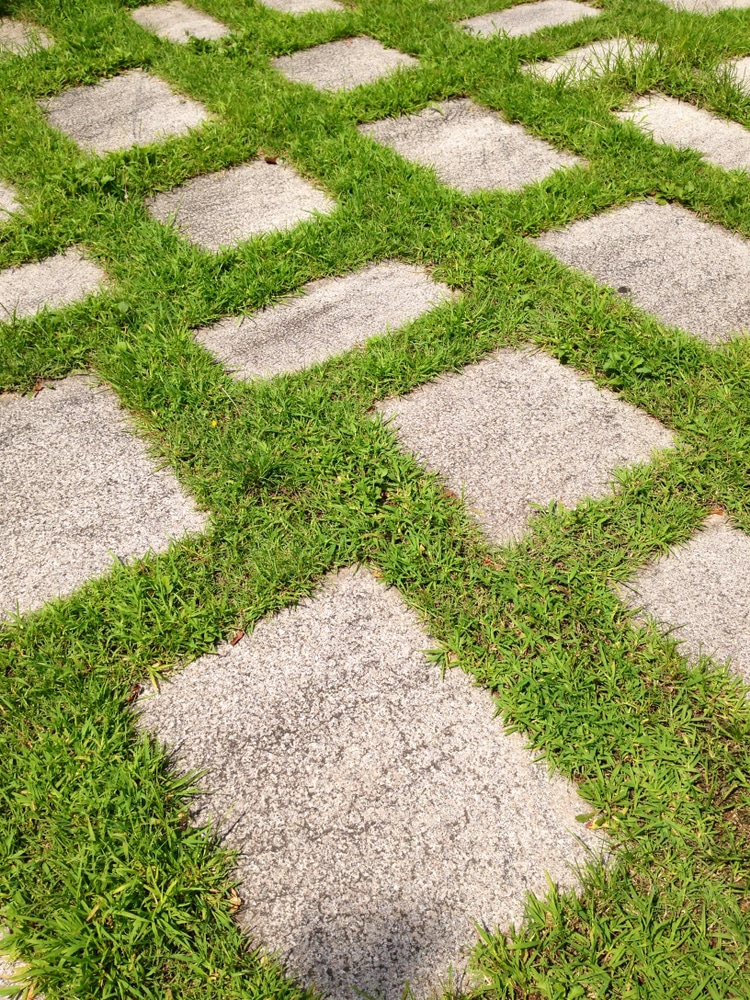
Green and permeable surfaces for access routes, parking, and storage areas
Environment
Administration
Agriculture, viticulture
Aid and care sector
Commerce
Craft Industry
Manufacturing
Last update: 18/05/2026
Outil disponible
Possibilité d’accompagnement
Subvention disponible
Nature‑based circulation areas: a contribution to biodiversity and climate adaptation
Many company premises are subject to high operational pressure and therefore often sealed beyond what is necessary. Paved areas such as parking lots, storage zones, and access routes contribute to heat buildup, reduce rainwater infiltration, and provide no ecological value.
By using permeable surfaces (e.g. grass pavers, gravel lawns, permeable paving with green joints, bound gravel surfaces) and integrating vegetation, these areas can be transformed into multi-functional green areas. These benefits include:
improved rainwater infiltration and reduced pressure on the sewage system,
fewer heat islands and improved local microclimate,
creation of additional habitats for plants and animals,
enhanced quality and visual improvement of outdoor spaces
increased lifespan of the surfaces due to reduced thermal stress.
The following sections outline the key steps to consider during planning and implementation.
Analysis of objectives and requirements of areas with unsealing potential
What are the specific objectives: is the focus on reducing heat buildup, increasing infiltration capacity and thereby lowering drainage costs, or improving the overall quality of the site for people and nature?
Which sealed areas on the premises could be considered for unsealing?
Which unsealing measures are appropriate for the intended use of each area?
Are some of these areas suitable for at least partial unsealing?
Are there municipal requirements or support programmes for unsealing measures?
How can employees be involved in the process?
What synergies exist with rainwater management, cooling, and the overall quality improvement of outdoor areas?
Identifying possible solutions and assessing feasibility
Analyse the existing circulation and parking areas (size, use, load-bearing requirements).
Select suitable measures: partial unsealing using grass pavers, eco paving, bound gravel surfaces, gravel turf or permeable concrete.
If applicable, integrate rainwater management (swales, infiltration trenches, retention basins or ponds).
Feasibility and cost assessment before starting the project
The feasibility of unsealing largely depends on how stable the chosen solution is for the intended use of the area. Frequent heavy truck traffic requires a very robust ground structure, which makes such areas less suitable for unsealing.
Initial maintenance efforts may be slightly higher until vegetation is fully established, but afterwards the maintenance needs are comparable, or in some cases even lower.
For larger projects, it is advisable to obtain cost estimates from qualified landscape planning offices, landscape contractors or horticultural companies.
If applicable, explore potential funding programmes and seek support from local nature conservation syndicates, nature parks or the municipality (e.g. through integration into their local heavy rain strategy).
Comparative cross-section of permeable surfaces: layout of vehicle parking areas and pedestrian zones for sustainable stormwater management source: www.stabilizer-wege.de
Consultation, support and application for possible subsidies
Contact local or national institutions that can provide technical guidance:
reduced surface runoff and improved soil infiltration
lower heat accumulation through increased evaporation
improved working environment for employees and a more positive public perception
Project implementation
Planning and design by landscape architects or companies with experience in ecological construction
Gradual implementation to avoid disruption to company operations
Optionally combined with employee activities (e.g. tree planting events)
Establishment of clear maintenance and management plans
Follow-up
Document the new maintenance tasks and associated costs using a before and after comparison.
Monitor water infiltration capacity after heavy rainfall and record temperatures before and after implementation to document the microclimate effect. Communicate these results internally (employees) and externally (customers, municipality).
Gather feedback from employees and customers regarding the improved quality of the environment and document it, if relevant, for your sustainability report or CSR communication.


 Administration
 Agriculture, viticulture
 Aid and care sector
 Commerce
 Craft Industry
 Manufacturing